
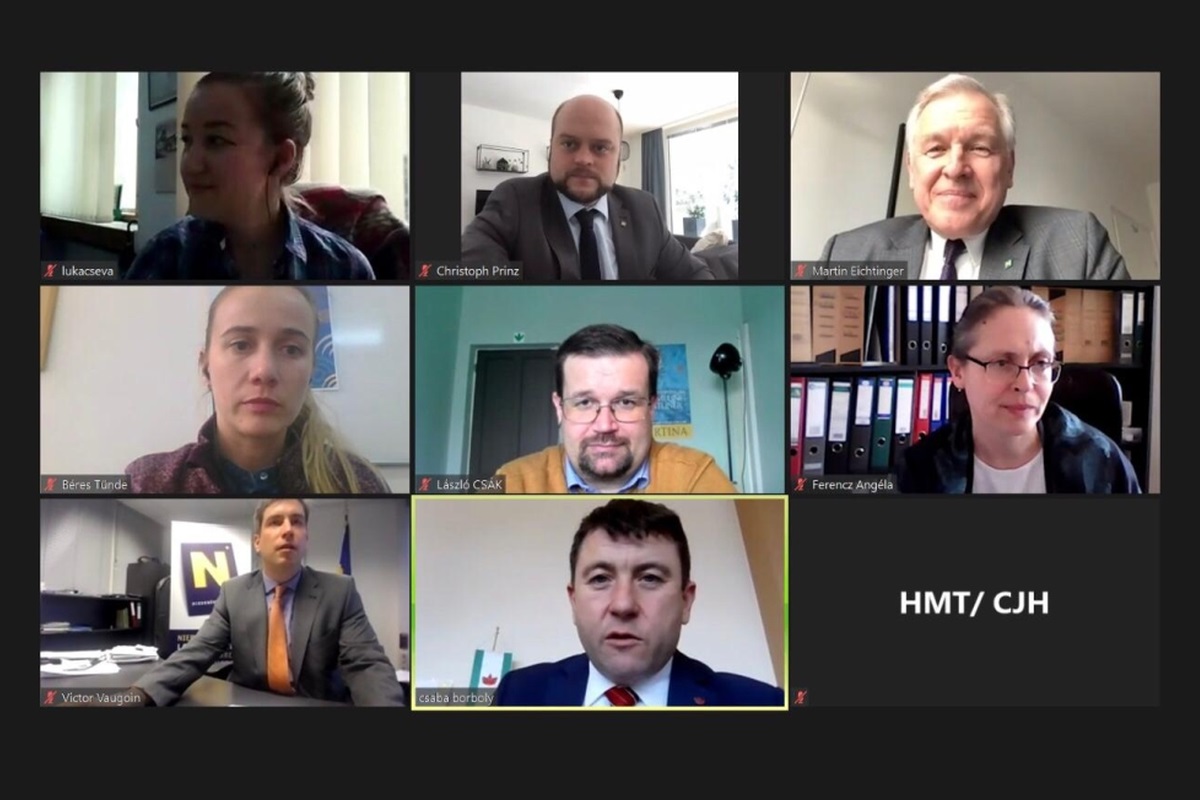
EPP-CoR Members Eichtinger and Borboly pledge their commitment to support the cultural and creative sectors
"Artists and those working in the cultural and creative sectors have been among the most negatively by the COVID-19 pandemic. In these challenging times, a strong commitment to support these sectors is of particular importance. The new Creative Europe programme needs to play a decisive role in relaunching the sectors, embracing digitalisation and new ways of catering to the interested public. Culture must also play a central role in the recovery process and must be integrated in national recovery and resilience plans." Martin Eichtinger, Member of the Government of Lower Austria made these remarks during an online discussion on the role of regions in the recovery.
Eichtinger explained that the restrictive measures which have been put in place throughout the European Union (EU), have led to a series of effects which have severely affected the Cultural and Creative Sectors (CCS). In particular, the venue and visitor based sub-sectors such as the performing arts were hit severely. Eichtinger added that this crisis has highlighted the vulnerable position of many non-standard workers, artists, freelancers and temporary workers. He recalled that 7.4 million people were employed in the cultural sector in 2019 which represents about 3.7% of all working people in the EU. In this regard he said that concrete measures were needed in order to save jobs.
On the new Creative Europe programme, Eichtinger said that "The programme has been critical for promoting Europe's cultural diversity as well as the competitiveness of the cultural and creative sectors. "Now it has been modernised to better equip these sectors to face today's challenges, including those brought about by the pandemic." Speaking on the vital role of investing in culture Eichtinger referred to European Commission President Ursula von der Leyen’s words that “culture and education are what links our history and our future. This is what makes us unique. Our soul, our culture, our diversity, our heritage."
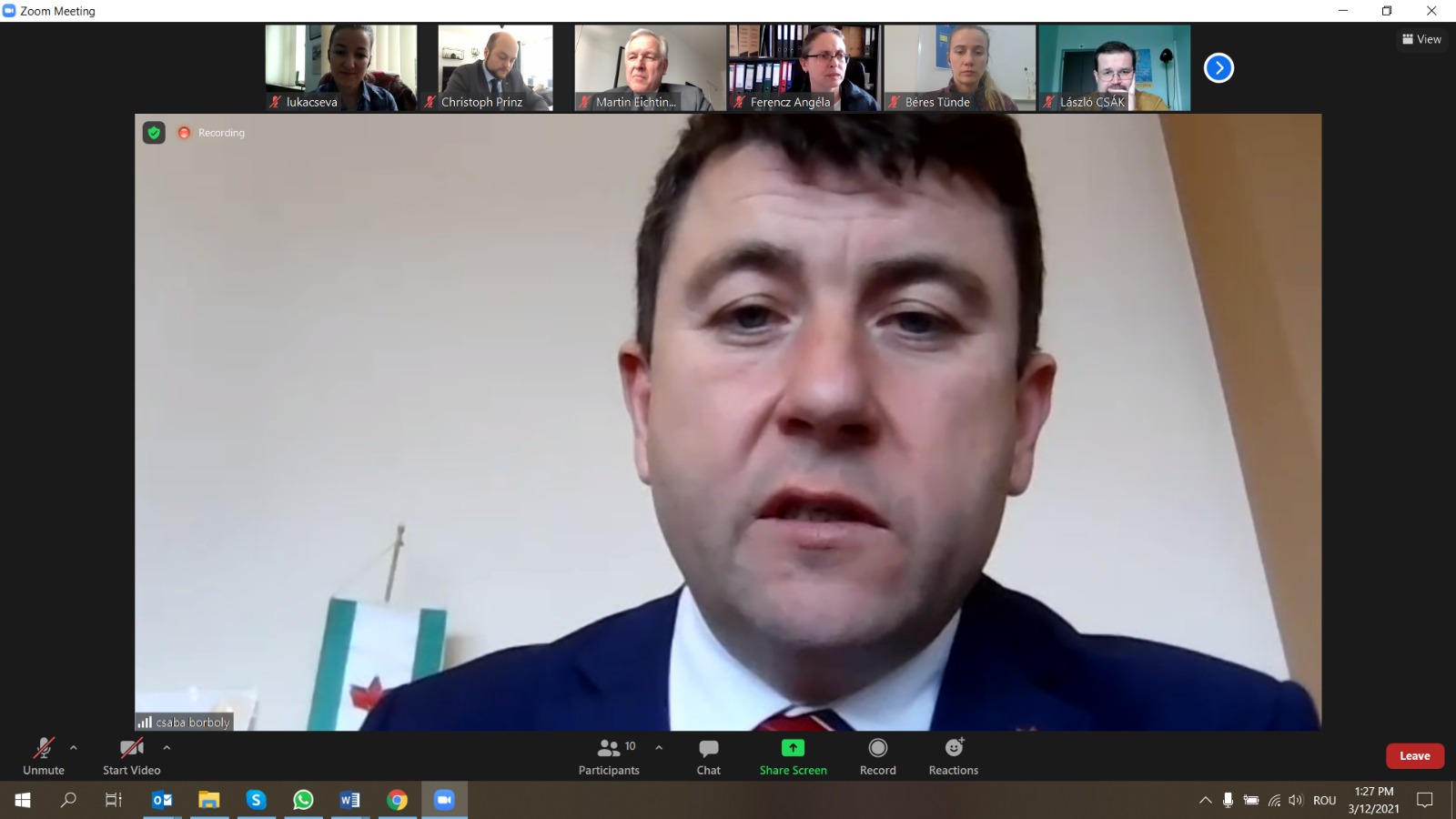
Participating in the online discussion was Csaba Borboly, President of Harghita County Council in Romania, who emphasised that cultural strategies across Europe need a change of attitude. Culture has an important role in regional modernization, therefore, its integration into development policies processes are necessary.
Mr. Borboly also highlighted that adaptation to digitalisation and skills development are necessary also for this sector, in order to guarantee the artists and cultural specialists resilience in times of change. Furthermore, it is important for cultural dialogue strategies and EU programmes to take in consideration the cultural characteristics and to give attention to the cultural traditions of all nationalities, including national minorities, since they are also part of the cultural diversity of the European Union. “Culture is an essential part of local and regional development and in order to reach EU objectives in this sector a new approach is needed in the elaboration of EU programmes and to take in consideration local aspects, challenges and diversity. They contribute to the attractiveness of local tourism, discovery of artistic talents, protection of cultural traditions and economic prosperity. In this sense, the EU should include integrating elements in EU funds for culture in order to guarantee all these aspects in the period 2021-2027.”
Cities and regions across the EU have played an important role in fighting the effects of the pandemic and have also supported the cultural sector. Various EPP-led cities including Warsaw and Sofia have created support packages for the cultural sector. During a debate on the recovery of the cultural and creative sectors, Mariya Gabriel, Commissioner for Innovation, Research, Culture, Education and Youth said that cities and regions can play a determining role to support the cultural and creative sectors and backed the call to allocate at least 2% of the budgets of the Recovery and Resilient Facility to the creative and cultural sectors.
The Creative Europe programme is the flagship instrument in support of the cultural and creative sectors – and the only one designed by the EU to support them specifically. It helps the cultural and creative sectors seize the opportunities of the digital age and globalisation, enable the sectors to reach their economic potential, contributing to sustainable growth, jobs, and social cohesion as well as give Europe's culture and media sectors access to new international opportunities, markets, and audiences.
For the EU, it is now a matter of strengthening European unity in diversity and shaping a common European identity, the two politicians said.
A shining symbol of this common European identity is, for example, the European Union Youth Orchestra. The orchestra consists of young talented musicians from all member states and is one of the leading symphony orchestras in the world. Eichtinger pointed out that the EUYO resides in Grafenegg in Lower Austria during the summer months and inspires with world-class concerts. It has been the cultural flagship of the EU for more than 40 years and is - as the former President of the Commission has already put it - the best possible ambassador for the European Union.

Leave a Reply